




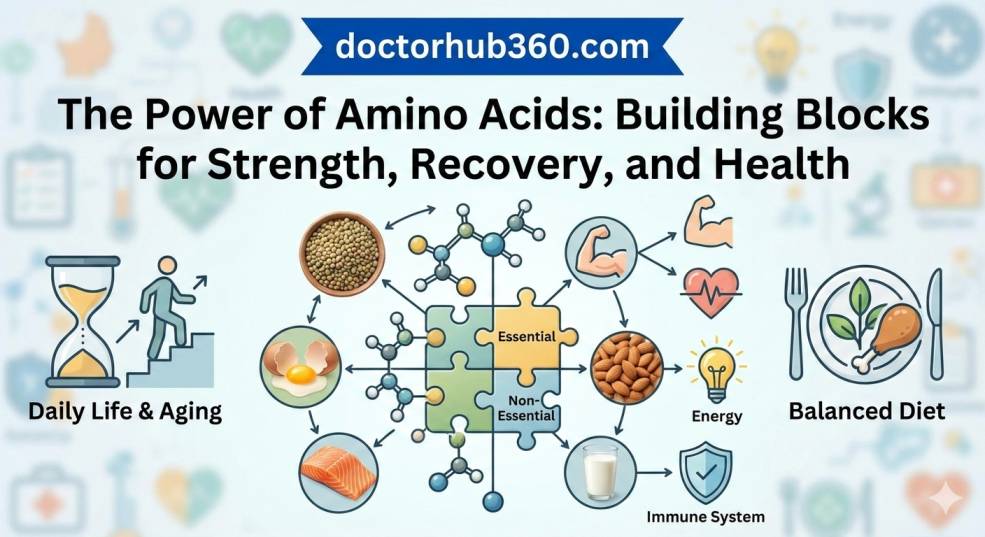
doctorhub360.com Amino Acids bring attention to a topic many people overlook until something goes wrong with their health. Amino acids rarely get the spotlight, yet they quietly support almost everything your body does. From repairing tired muscles to keeping your immune system steady, they work behind the scenes every day. This article explains what amino acids are, how they function, where to find them, and why understanding them becomes more important as life gets busier and bodies get older.
What Are Amino Acids?
Amino acids are the basic units that form protein. When you eat foods like eggs, lentils, or yogurt, your body breaks down the protein into amino acids and then reuses them as needed. This process happens constantly, whether you are working at a desk, walking up stairs, or sleeping at night.
What often surprises people is how quickly the body uses these building blocks. Muscles, skin, hormones, and even digestive enzymes rely on them. Without enough amino acids, the body still functions, but less efficiently, much like a machine running on worn-out parts.
Types of Amino Acids Explained
Not all amino acids are handled the same way by the body. They are grouped based on whether your body can make them or must get them from food. This distinction matters more than most diet trends admit.
Essential Amino Acids
Essential amino acids must come from what you eat. They are essential for muscle repair and strength. Anyone who has felt soreness after a long walk, a workout, or even a day of physical work has experienced their role firsthand. When the diet lacks these amino acids, recovery feels slower, and fatigue lingers longer.
Non-Essential Amino Acids
The body itself produces non-essential amino acids. Still, that does not make them unimportant. Stress, poor sleep, or illness can reduce how well the body makes them. A balanced diet helps maintain this internal production, which becomes more noticeable as people age.
Health Benefits of doctorhub360.com Amino Acids
The health focus of doctorhub360.com Amino Acids goes beyond muscle talk. Amino acids influence energy levels, immune response, and even mood. People often blame tiredness on age or workload, but nutrition quietly plays a role.
Muscle repair is the most talked-about benefit, but amino acids also help regulate metabolism and support hormone balance. Research consistently links adequate protein intake with better muscle strength and physical independence, especially in adults over 40. In daily life, this means fewer aches, better stamina, and improved recovery from everyday routines.
Best Food Sources of Amino Acids
Food remains the most reliable source of amino acids. Diets that rely too heavily on processed meals often fall short, even if calorie intake seems high. Real, whole foods tend to deliver amino acids more effectively.
Animal-based foods like eggs, fish, dairy, and poultry provide complete amino acid profiles. Plant-based foods such as lentils, beans, nuts, and whole grains also contribute strongly, especially when combined. A simple meal of rice and lentils, for example, supplies a broader amino acid range than many people realize.
Amino Acids in Daily Life
Amino acids are not only for athletes or gym routines. They matter just as much for office workers, parents, and older adults. Sitting for long hours strains muscles subtly, and amino acids help repair that strain overnight.
After a long workday, the body begins its repair process during rest. Adequate amino acid intake helps ensure you wake up feeling functional rather than stiff. Over time, this daily repair cycle shapes how energetic or sluggish life feels.
Who Needs Extra Focus on Amino Acids?
Some groups benefit more from paying attention to amino acid intake. Athletes are an obvious example, but they are not alone. Aging adults often lose muscle mass gradually, even without noticing it at first.
People with low-protein diets or irregular eating habits may also fall short. In these cases, meals that prioritize protein quality can make a noticeable difference in strength, balance, and overall resilience.
How Much Amino Acid Intake Is Enough?
Protein needs vary, but general guidelines suggest about 0.8 grams of protein per kilogram of body weight for most adults. Active individuals often require more. Instead of counting numbers obsessively, focusing on regular, balanced meals usually works better in real life.
Including protein in each meal spreads amino acid intake evenly, which supports steady energy and muscle maintenance throughout the day.
Common Myths About Amino Acids
One common myth is that amino acids are only for bodybuilders. In reality, they support basic movement and recovery for everyone. Another misconception is that plant foods lack amino acids. When eaten properly, plant-based diets can effectively meet amino acid needs.
Clearing these myths helps people make food choices based on health rather than marketing noise.
Final Thoughts on doctorhub360.com Amino Acids
doctorhub360.com Amino Acids highlight an essential truth: small nutrients can have a significant impact. Amino acids support strength, recovery, and long-term health in quiet but powerful ways. Paying attention to protein quality, not just quantity, helps the body age better, recover faster, and function more smoothly in everyday life.